Showing posts with label historical fiction. Show all posts

Tuesday, 21 May 2019

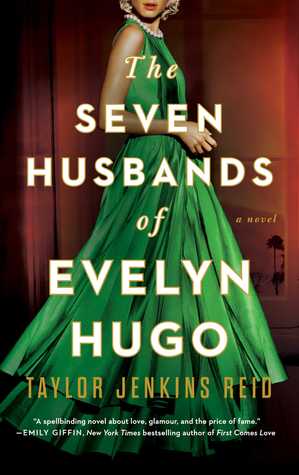
Book Review: The Seven Husbands of Evelyn Hugo by Taylor Jenkins Reid

I received a copy of this book in exchange for an honest review. 

When I started reading this I had no idea that with each husband, I’d grow ever deeper in love with Evelyn Hugo. This is a closer look at the life behind the glitz and glamour of Old Hollywood, where the cost of fame and fortune may be greater than you expected. It explores the manipulation of people without regrets, the lengths people will go to for fame, and at the heart of it it’s about a great, all consuming love affair. 

Evelyn is a star. A beautiful, shrewd star. As she tells her life story to Monique, a journalist she’s actively sought out to tell her story to, we see her shed the hidden layers and lies she’s held on to her whole life. What starts as a guarded confession to the great love of her life quickly turns into something far more encompassing, and demonstrates just what sacrifices Evelyn has made to hide her true self, and protect those she loves at all cost. She doesn’t regret, she doesn’t forget, and because of this you may think that Evelyn might be quite emotionless. But she’s far from it. She’s an actress, born to display only what she wants the world to see, yet we see moments of true vulnerability scattered throughout the story. She’s complex and unpredictable, with a strong sense of pride and self. She’s under no illusions that she’s a good person, and that’s what makes her so deliciously intoxicating to read about. She’s the heroine and the villain. 

I love the way the plot unfolds, told chronologically from the introduction of each new husband, scattered together with the present day and Monique’s story. Both characters bounce off each other well, as Monique struggles to assert herself against Evelyn’s dominant personality at first, before using her as an example to sort out her own life problems. I worked out the link between the two women quite quickly into the establishment of the story, but that didn’t spoil it at all. Far from it, I think the reader is suppose to know the real reason for the meeting between these two women before Monique is told the truth. It adds to the complexity of the characters, and enhances Evelyn’s moral ambiguity. 

The secondary characters who support Evelyn’s journey are also wonderfully fleshed out, especially Harry and Celia. Without them this story would be missing the heart that it needs as they help to show the softer side of her personality and shape Evelyn into a better person. There are moments of grief, laughter and love between them all that’s beautiful to read. It’s their stories, all woven together at times, that adds such a richness to the story. The husbands all pale into the background by comparison.

Highly recommend. This isn’t my normal genre, but I’m so glad I had the opportunity to read this. It’s utterly remarkable, and very well written.

Friday, 3 May 2019

Book Review: The Winter of the Witch by Katherine Arden

I have so much to say about this book that I’ve been holding back reviewing it until I had time to fully invest myself in my thoughts. I know it’s only March, but I think this is my favourite read of 2019 and it’ll be pretty tough to beat. 

In the third book of the Winternight Trilogy we follow Vasya immediately on from the conclusion to [book:The Girl in the Tower|34050917]. There’s no time to catch your breath, no month long interval, it’s straight into the heart of the action and issues surrounding Vasya and her family. There are riots and pitchforks, fires, and accusations of witchcraft and sorcery. And leading the rabble is a certain priest with a silvery tongue, guided by an ancient enemy now released from his prison. Arden has such a way with words I fell immediately back into this world, experiencing everything alongside Vasya and Solovey. The confusion, the chaos, the sights and smells of Moscow just jump from the page and I felt their anxiety and fear right there with them. When you’re crying before you’ve even reached 10% in a book, you know it’s touched you deeply. 

When this writing craftmenship is interwoven so perfectly with magical folklore and real, known, history it combines to make a truly exceptional read. I loved the introduction of the mysterious territory known as ‘Midnight’ and the field of horses. Getting to see some of Solovey’s, and later Vasya’s, mysterious past was bittersweet and touching too, and just added to Vasya’s strength of character. The descriptions of seasons past, as we walk this journey, is wonderfully descriptive and fully immersive again. The plot is always driven and forceful, and the pace continues throughout with multiple twist and battles. 

Vasya has also come so far as a character, and it was an absolute pleasure to see her develop further here. She’s constantly trying to learn who, or what, she is, while trying not to give in to the free spirit inside her that tells her to flee into winter. She’s willing to sacrifice everything, including her supposedly immortal soul, for her family, and I loved her for that. Her ability to admit her failings, while still yearning to be what she’s expected to be makes her vulnerable yet deeply endearing. She’s a complex woman with strong convictions and a moral backbone that is decidedly unique and wonderful to read. 

The priest Konstantin is another deliciously complicated character. His mixture of pure hatred and lust for Vasya has not quelled, fuelled by his relationship with a spirit who takes pleasure from suffering and internal torment. He’s a deeply troubled man with a gift for creating beautiful things, and although he hates Vasya he hates himself more. There’s a strange mix of pity and anger that I felt when reading about Konstantin. At some of the truly terrible things he does, I hated him like no other, yet Arden has this ability to make me feel sorry for him. It’s close to how Vasya feels towards him too, and to see both of their internal struggles towards the other is quite electrifying. 

I couldn’t write this review without touching on Vasya and Morozko’s relationship. At once deeply complicated, and now, rather fractured, we see each of them learn from one another, and what they are to each other. It’s touching and beautiful, sweet and passionate all at once, but never overpowers or is as important to the storyline as Vasya herself is. She never needs Morozko to fulfill her destiny, but rather must discover it for herself and rescue him. It’s a reversal of the stereotypical ‘girl in the tower’ (which makes it even more ironic given the title of the previous book in the series). I love Morozko. His icyness, aloofness, quite literally melts when Vasya gets through his defences. 

<spoiler>Solovey. How can I write about what happens to Solovey? Heartbreaking. And it’s never swept under the carpet or used simply as a plot device. The grief is always there, always apparent when Vasya looks at other horses. The guilt and ache she feels when riding the ‘fire bird’ feels so real, and respectful to Solovey’s memory, that I felt deeply touched by it. I haven’t sobbed over a book in a while, but this managed to grab hold of me very tightly and feel that grief personally. </spoiler>

A really wonderful, magic story full of folklore and history, love and friendship. A must read.

Monday, 10 December 2018

Book Review: Smoke in the Sun by Renee Ahdieh


I received a copy of this book in exchange for an honest review.

A wonderful conclusion to a duology that’s built upon its predecessor to create a magical world with colourful characters set against the backdrop of Feudal Japan. The story follows almost immediately after the conclusion of [book:Flame in the Mist|23308087], with little time to catch your breath before the action begins. We find Mariko being transported to the Emperors palace to meet her future husband, the emperor’s eldest illegitimate son Raiden. Okami is captured, bound in chains beneath the same palace, and Kenshen is still dealing with the aftermath of his misdemeanours, with blood on his hands and his loyalty to his new emperor called into question.

This felt immediately like a more mature and well developed novel compared to the previous instalment. The characters are well established, allowing the author to build up an emotional connection with the reader. Mariko is now not only a fierce and confident ‘spy’, but also a source of inspiration to those around her - especially Yumi, who can see a similar conflict she shares with her own brother in Mariko. There’s also a certain amount of jealously over her ability to be readily accepted for who she really is by the Black Clan, which gives Yumi the strength to follow her own path based on Mariko’s courage. It was good to see both characters flourish after a promising introduction in The Flame In The Mist. As usual, Marko’s interactions with Okami are suitably tense and filled with the right level of passion to propel their love story throughout the novel.

I was surprised to find that my favourite character in the novel was actually Raiden. A deeply complex character, the older brother forced to serve a younger brother, brought up to hate him yet still resolutely loyal and protective of him. There are feelings of inadequacy, guilt, and a growing respect for his would-be bride Mariko that spills over into protection - not only for her, but the whole court. Kanako, his mother, is similar in her initial complexity. Again, she’s fiercely loyal to her son but I found that she was a little more reserved in her personality with little backstory to support her overall scheme and justify her actions. I wanted to know more about why Kanako made the various choices she makes throughout the novel, and also how.

The world building is subtle, with talk of demons and a complex magical system that binds humans to various creatures via a sacrifice. However, I felt it needed developing a bit more, and was lacking in detail. This was perhaps my main issue with Kanako, who’s story and plan is so closely linked to these demons that with a ore in-depth explanation of her journey and process to becoming ‘one’ with her various demons, I might have understood her more.

Other themes through the novel included the pattern of accepting responsibility for your actions and the idea that respect should be earned not given freely. Roku, as Emperor, has no one to keep him in check, allowing him to grow sadistic and mad with rage. Theres no empathy or compassion for his elders and respected council, leading to anarchy and destruction in his city. There’s no honour or goodness, unlike Okami, who has the respect and loyalty of his Black Clan family and the ability to lead where anyone will follow. They’re the light and darkness to the story and perfect opposites and the eventual showdown between the two demonstrates this well.

I enjoyed this thoroughly, and thought it was a refreshing YA fantasy novel that covered some important themes in an entertaining way.  A great addition to the genre.

 - 4 stars

Friday, 7 December 2018

Book Review: Fame in the Mist by Renee Ahdieh


After a slow start, this built into a wonderfully fun tale of trust, lies, magic and warriors. Some have described this as a ‘Mulan’ retelling, but beyond taking the identity of a young man and joining a band of warriors, I felt this was so much more than that.

I was particularly taken with the themes and settings within the story, as they felt so authentic and were described well. The forest where Mariko begins her journey with the Black Clan in particular is suitably menacing, with descriptions of otherworldly creatures and man eating trees. There’s an underlying presence of things that are always watching, hiidng just out of sight, waiting to guide or hinder an unfortunate victim. The tea house and emperor’s palace, where we’re introduced to Yumi and various secondary characters, are suitably a polar opposite to this as we are exposed to opulence and excess - another level of foreshadowing that exposes the corrupt nature of the empire.

Mariko is a strong protagonist, although I admit to feeling annoyed with her in the beginning. She believes herself to be worldly wise, cleverer than most people she meets and her only hindrance is her sex. She initially looks down on the Black Clan as murderers and thieves, believing herself to be far superior. However, I liked her development over time. As she becomes more worldly wise, she opens herself up to more points of view and the rose tinted glasses she’s worn her whole life begin to fall. Her conflicting feelings for her brother also help to build on overall feeling of inner turmoil and a conflict of loyalties that helps propel the story forward.

The various relationships between Mariko and the members of the Black clan certainly help to shape Mariko’s changing point of view. From hostility to friendship and more, it’s built on gradually and in a realistic way. I particularly liked the dynamics between Okami, Mariko and Ranmaru. We have the headstrong leader, the carefree warrior and a girl who equally hates and admires these two men. The mixture of confusing emotions makes for a great amount of internal struggle and tension with arguing and cerebral mind games that’s delicious to see unfold, and builds to a great scene in a hot pool.

Some storylines were left a little undeveloped towards the end, such as Yumi’s story and the real truth behind the attack on the convoy that brought Mariko to the forest. The chapters involving the emperor and his wife/courtesan also only show hints of some foreshadowing of darker magic and a larger overall plan that I presume will be expanded on in future novels. There’s also a cliffhanger ending, which I tend to dislike in novels as I find them untidy.

However, overall I really enjoyed this. I’m so glad I picked it back up again after initially thinking it was too slow. The gradual build up and development of these characters set in a wonderful and more diverse world really made for a strong YA fantasy with the right amount of magical realism to keep me wanting more. I look forward to the sequel.

Wednesday, 5 December 2018

Book Review: Kindred by Octavia E. Butler


I received a copy of this book in exchange for an honest review.

A powerful story, that even nearly 40 years after it was first published is still incredibly hard hitting and relevant today. Dana, an African-American writer, can travel through time. Intrinsically linked to a boy called Rufus, who lives in the pre Civil war Maryland, she appears to him whenever he appears to be in danger. Connected through time, Dana becomes embroiled in plantation life, and makes the often difficult decisions needed to survive and return to her own time.

I was surprised how deeply involved I became in the storyline. There’s no shying away from the brutality of life for slaves in the ante bellum South here. Everything is told vividly and convincingly. It’s violent, cruel, raw and very real. The characters are full of life and complexity too. Not least Rufus, who we follow through Dana’s eyes from child to man as the son of a plantation owner. At first, we feel something similar to pity for him. His father ignores him, his mother mollycoddles him, and he’s friendly with his slaves children. Brought up to abuse them without really understanding that he’s doing so, his rude introduction to Dana catches him by surprise, and we hope, maybe change him into a better man than his father.

There’s a scene we see between some slave children, where they play act a slave auction as if it’s normal and unordinary. Dana and her husband Kevin are appalled by this, and it reminds them that no matter what they may feel about integrating into this lifestyle, they’re not of this time. Their attitude is grossly different to the contemporaries they’re surrounded by, and this is mirrored in Rufus as he grows up to be a person Dana comes to despise, down in part because of his upbringing and environment. It’s a deeply complicated codependent relationship, as Dana tries to shape him into a ‘better man’, but being pulled up short by the times and expectations. For example, Rufus sees no harm in repeatedly humiliating and beating Dana to remind her of her place, just as his father does, yet feels some level of shame in doing so and feels a ‘need’ for her never to leave him. It’s a kind of love that’s toxic, but one Rufus believes is acceptable between a plantation owner and people he believes he owns.

There’s a certain level of complicity that runs throughout the novel, as Dana seems to readily slip into this role of slave and accept that she may never return to her present time. She accepts Rufus’ often brutish treatment of her, along with the other white men she comes across, without any consideration as if it’s her birth right as a black woman during this period of time. Perhaps this is because of the deep level of fear that seems to permeate the novel between all of the slaves. It’s as if at any moment, any of them could be sold or beaten to death (or worse). They’re so downtrodden, it’s hard to imagine how anyone could rise above this to lead any kind of revolt or rebellion and it amazes me that anyone of this time did. These are the people history tend to overlook, when they faced such abject adversity to make them truly heroic . 

I would liked to have seen more of Dana and Kevin in their time together ‘after’ and how deeply the emotional scars ran into the future, and how they’re altered by their time spent in the past. However, this was a wonderful read.

 - 4 stars

Friday, 30 November 2018

Book Review: Circe by Madeline Miller


I loved this. Magic, mythology, love, grief, madness and the pride of Gods. All wrapped up in adventure in the wonderful setting of a Greek island. It’s the perfect story for the summer months. Madeline Miller weaves a story steeped in lush island life, described so vividly, and inhabits it with characters so wonderfully colourful that I could truly imagine myself walking alongside Circe.

Circe is a Goddess ahead of her times. She’s shunned from childhood as the lesser God, the most unruly and weak compared to her brothers and sister. She has none of the grace or slyness of Pasiphae, or skills of Perse. She’s meek and unsure of herself, desperate only for any affection she can find. And she finds it in the unlikely source of mortals. Youthful jealousy sees Circe banished from her fathers hall, but this only works to allow Circe to flourish and reach a potential she never knew she had. We see her flirt with Gods and men, always there in the shadows of great adventures and stories, offering guidance and support. All the heroes of the Golden age of men end up on her shores, and she’s there to listen and help - surrounded by her animals and magic.

The island of Aiaiai serves as a base throughout all this, both to Circe’s fragile nature and her need for reassurance and solitude, and later her need to nurture and heal her wounded heroes. This allows the story to spread out like tendrils from the island, taking us to Crete and other islands, before returning to the safe haven of home. It’s grounding influence soon begins to mirror Circe herself, and is a reflection of her personality and nature. Changing with the seasons but always there, bound and unwavering.

The depictions of the Gods we see are also well done. Hermes, trickster and messenger, is always there to manipulate and tease Circe. I could image him with a rakish smile, standing by her door night after night. Athena, logical and cruel, unable to comprehend being told ‘no’. And Apollo, beautiful and lyrical, master to prophecies yet unemotional. Their presence is felt throughout, but rarely seen, making their appearances as they should be - short yet with devastating consequences.

This has been my favourite read of the year so far, no question. I fell completely in love with the story telling, the settings and the characters. Wonderful.

 - 5 stars

Monday, 19 November 2018

Book Review: Mythos: The Greek Myths Retold by Stephen Fry


This was the perfect book to read over a very sunny and hot Bank Holiday.

Covering the dawn of the Gods, through the golden and silver ages, this discusses a wide range of stories told in the usual Fry wit. It’s incredibly informative and well planned out, told in a more structured chronological order than I’m normally use to with these stories. And I’ve read a lot of these stories. There’s nothing new here if you’ve delved into Greek mythology, but I enjoyed Fry's take on them - and I really liked the little addendums of information littered throughout that enhanced my knowledge of the Greeks and their language and lore.

My favourite stories have always been those about hubris, or pride, and here we get a whole chapter dedicated to the various ways the Gods have punished those mere mortals who dare to challenge them, such as Arachne the great weaver and Marsyas the ill fated satyr. The stories are told in such a laid back way, that it’s easy for those familiar, and those who are new to the stories, to equally enjoy them. The Gods are described in such a colourful, fun way, that their distinct personalities leap from the pages and allowed me to fall in love with them all over again.

If anything, this lacked the luscious tales of the later period dedicated to the great heroes of Odysseus, Perseus, Jason etc. I hope that Fry writes another volume to include these at some point because they for me really embody the overall epic feel of the Greek stories. However, this certainly has its place amongst other retellings.

 - 4 stars

Wednesday, 14 November 2018

Book Review: Lady Mary by Lucy Worsley


I received a copy of this book in exchange for an honest review.

Lady Mary follows the story of Mary Tudor, eldest daughter of Henry VIII, during her tumultuous teenage years as she falls from grace during the breakdown of her parent’s marriage and beyond.

I would definitely describe this as younger adult. We follow Mary from the age of 11 until 21, yet her tone and behaviour never seem to mature beyond that of a child. She’s petulant and naive, prone to fainting and just generally acting like a girl, not the dominant princess she’s raised to be. The writing is also sometimes overly simplistic in its presentation too, and lacked any real emotional complexity. Things are just described or explained ‘as is’ without any subtlety.

Secondary characters are also very black and white, almost cookie cutter images of their real historical counterparts. Anne is described as the ‘wicked lady’, forcing Mary into servitude and despair, while her mother is the proud Spanish queen. There’s no development of these characters beyond this, which I was disappointed by. Other characters are introduced before being suddenly removed from the plot incredibly quickly before we can get to know them, (namely Lady Shelton’s nephew) and felt almost like accessories to drive the plot or create some small amount of drama to make the many years of Mary’s confinement more interesting than it probably was originally.

I would have loved to see more of the relationship we see between Jane, Mary and Henry towards the end of the novel. The idea of some weird ‘family’ dynamic, having a queen so close in age to Mary and her struggles to accept and gain friendship from this woman who clearly just wanted to please the king and her new stepdaughter. Unfortunately these scenes were rather rushed after spending so many chapters seeing Mary locked away, which again I found disappointing. I also thought there was a missed opportunity to see a future Mary seize the throne after her brother’s death, which would have brought some much needed action and strength of character to Mary. Ending where it did was a little lacklustre.

Don’t get me wrong, I love this period of history, and because of that I did enjoy this. But I just found it lacking in quite a few key areas. If I was ten years younger, I probably would have lapped this up and I do think there’s a large gap in the market for historical YA of this era. It would a pleasant change of scene for me to read, it flowed well and was rather light and innocent in tone which I liked. There’s also so little written about Mary that isn’t negative that this felt very refreshing.

Perfect for younger teens interested in a queen often overshadowed by her father and younger sister.

 - 3 stars

Monday, 2 July 2018

Book Review: Unveiling Venus by Sophia Bennett


I received a copy of this book in exchange for an honest review.

Mary Adams, one time scullery maid, finds herself rubbing shoulders with the high society of London and Venice as alter ego Persephone. But with an ambition to rise to the top, she must sacrifice everything and betray those she trusts most.

I loved the descriptions of Venice in particular. It makes you feel like you’re there, and I enjoyed seeing the city through Persephone’s eyes as the streets, paintings and lifestyles are vividly brought to life. The lavish lifestyles of the rich and famous are also well depicted, and really help to make you fall into the time period, with sumptuous costumes and beautiful fancy homes.

The main character, Persephone, is also deeply compelling, intriguing and carries the plot well. I loved the idea of a lowly scullery maid having a glamorous alter ego. Although she’s a stereotypical ‘beauty’, and an ideal candidate for a painter’s muse. Liked her relationship with Kitty, it feels genuine and they counteract each other well with their personalities. They’re well developed, and have a range of emotional depth I rarely see in this kind of historical YA novels. I also enjoyed Persephone’s relationship with the wide range of secondary characters and servants who seem to reference her time as a scullery maid. There’s a good level of camaraderie between them that makes Persephone more endearing to the reader.

Arthur provides a worthy antagonist to the group, swooping in and stirring the pot enough to create tension between Kitty and Persephone. He’s very easy to dislike, which I often find is a hard thing to recreate in a realistic way in YA fiction. Most villains are all too often over the top and over dramatic. This wasn’t the case here, as Arthur is able to manipulate both Kitty and Persephone, and sew the seeds of doubt without resorting to outlandish plans.

I would have liked a deeper in-depth look at the artistic works described. Persephone ‘sits’ for several painters, alluding to being a subject of one rather famous painting in particular, yet we never see it, which I found disappointing. It would have been far more scandalous to see people’s reactions. I often felt that the artistic aspects of the plot fell a bit flat, and didn’t really enhance anything. The pacing was also a little off in places, and a little disjointed as we see Persephone flit from Venice to London and beyond. I think if the story had stayed in Venice, I would have enjoyed this more.

A good example of YA historical fiction, which is a rare thing. The descriptions of Venice and characters stand out in particular, but I wanted a tighter plot.

 - 3 stars

Monday, 25 June 2018

Book Review: Caligula by Simon Turney

I received a copy of this book in exchange for an honest review.

2.5 rounded up.

This is not my usual genre of history. I know little beyond the widely known in terms of Roman history. However, I thought I’d give this a go and see if it piqued an interest. Unfortunately it didn’t.

Is Caligula really the cruel, sadistic tyrant he’s often portrayed as? Or is there more to the man than what history chooses to tell? Told by his sister Lavilla, we see the fun loving boy develop into the calculating man who must take care of his family in order to survive. With betrayal after betrayal we see his decent into madness, and what it truly means to sacrifice everything to rule with absolute power.

This was really well written, and is certainly a different take on the ‘known’  history of Caligula. It stresses the point that history is often an extension of the truth and shouldn’t always be taken at face value. There are not many surviving historical sources that tells us what Caligula was really like, with most stories coming many years after his death. This leaves his story very open to interpretation, and this was an interesting premise. The descriptions are also vivid and really help set the scene for someone who knows very little about Roman history. I wasn’t confused reading this at any point.

I also thought the overall atmosphere in the story is built up well. There’s an undercurrent of tension that builds gradually over time, mixed with constant underlying suspicion. It feels like Caligula needed to be constantly on his guard, never trusting anyone. No wonder he went mad with paranoia.

Unfortunately, for the most part, I found this rather dull, which I think is due to the subject matter just not really being interesting to me, and also because I found there wasn’t much character development beyond that of Caligula, who is wonderfully complex. There was so much potential to build Lavilla into a complex character, but this isn’t developed. She comes across as more of a biased narrator with an almost unwavering amount of affection for her brother that boards on worship, which I found annoying. Also I found that sometimes having her as the only narrator was rather jarring, and odd, as she seems to turn up in places she shouldn’t be just in order to overhear a conversation to further the plot. I think it would have been more beneficial in this instance to have more than one view point - for clarity and a more unbiased option of Caligula.

I think this would appeal to those who enjoy a Roman historical novel, as a do find the premise quite unique. However, without more interesting characters, it just wasn’t my thing.

Caligula is available to purchase now from: Amazon

 - 3 stars

Monday, 14 May 2018

Book Review: The Seven Deaths of Evelyn Hardcastle by Stuart Turton


I received a copy of this book in exchange for an honest review.

This is a mastercraft in historical fiction, unlike anything I've read since Agatha Christie.

Evelyn is going to be killed. Again. Every night her murder goes unsolved, the gala party where she dies restarts and Andrew is always too late to save her.

The writing is hugely atmospheric, and sets the scene perfectly. The descriptions are rich and detailed. It's almost like stepping back in time and being with these characters, living (and dying) amongst them. The plot is also quite unique in that the story is told over and over with Andrew taking the role of a different character every night with small hints and clues drip fed throughout, almost like a historical 'Groundhog Day' meets 'Cluedo'. However, the plot can never be taken at face value, as nothing is really as it seems and characters constantly surprised me.

It's not an easy read by any stretch of the imagination - there's twist and mysteries that left me completely baffled and had me desperate to understand what was going on, but that's what makes this such a compelling read. You really want to know what happens, as you try to draw conclusions before Andrew. I found I was especially drawn to Evelyn, and as her story unravels I felt a need to know who killed her.

That said, at times I felt a disconnection with some of the other characters as I was mainly so invested in Andrew and Evelyn, and sometimes it took a while for me to get my head round Andrew as a new person with different mannerisms every night.

Still, I thought this was like a breath of fresh air for the mystery genre. Different and exciting.

The Seven Deaths of Evelyn Hardcastle is available to purchase now from: Amazon

 - 4 stars

Tuesday, 5 December 2017

Book Review: The Girl In The Tower by Katherine Arden


Well this was truly magical to read. I loved the previous novel in this series, The Bear and the Nightingale, and had high hopes for the follow up. I was not disappointed. Everything I loved from the first novel - the atmospheric setting of medieval Russia, the richness and depth of characters, and a strong background rooted in Russian folklore were developed and expanded upon to make one of the best reads of the year.

The Girl in the Tower continues to follow Vasya, as she struggles to find herself now she's free from her strict father and the rules she has been made to follow. Above all else she wants freedom. She wants to travel the world with Solovey, her companion horse, and taste the feel of adventure. But the constrictions of her time, and the imminent dangers that face her family in Moscow - particularly her sister Olga and brother Sasha, bring her crashing back to face her responsibilities. The only way to taste the freedom she longs for is to disguise herself as a boy, and join her brother in the hunt for men determined to topple the Grand Prince of Moscow from rule.

Mixed in among the politics of a developing nation, we have a story steeped in Russian folklore. The domovoi and creatures of Midnight seen in the previous novel return, and of course we have Morozko - frost demon and Winter king. Slayer of human girl's hearts, and Vasya's lover. Although labeling him this makes it seem everything is black and white, when it's far more complicated than that. Morozko is deeply conflicted in his feelings for Vasya. He is immortal, and should be unable to feel such things as love. Yet he struggles to let her go and lead the life he wants her to live. He's grown attached to things that should be forbidden to him. He's got so much emotional depth as a character, even though his time with Vasya is often so fleeting and void of conversation. Honestly, I think I'm a little bit in love.

Vasya has also grown so much as a character since we first saw her in The Bear and the Nightingale, and it's great to see her develop slowly. It's almost as if I've grown up with her, and faced these troubles by her side. She's determined to rule her own life, not needing anyone and anything to do what she wants. Her relationship with her older siblings Olga and Sasha has also developed, now that she's meeting them for the first time as an adult. She's challenging them on an intellectual level, yet she loves them deeply - to the point where she would sacrifice her happiness and freedom to keep them safe. She's not perfect either. She's rash, and bullish - at one point taking someone's choice out of their hands when it is not her decision to make. She's refreshing and wonderful.

Father Konstantin also returns - after being banished by Vasya in the previous novel, although he is woefully missing from most of the novel. I enjoy the complexity of his character - his deeply ingrained belief in his faith, yet with a love/hate of Vasya and a yearning to belong.

The plot itself to contain all these wonderful characters is great. It's well paced, as we travel with Vasya and Solovey on their journeys around Russia and then onto Moscow with Sasha, and the plot developments largely left me surprised. There's horse races, magic and little girls in danger. Unlike the previous book, I also thought the ending was well defined and didn't end abruptly. I was satisfied (and sad).

Honestly, I enjoyed this immeasurably, and I cannot wait for the final book - and bringing Vasya home.

The Girl in the Tower is available to purchase now from: Amazon

 - 5 stars

Thursday, 23 November 2017

Book Review: The Last Hours by Minette Walters


In The Last Hours we find ourselves in the village of Melcombe, Dorset 1348. The Black Death has taken Britain, and all - old or young, rich or poor, are subject to its whim. Many believe it is a curse sent from God, but Lady Anne has other ideas. Raised by nuns, she has the foresight that could save her household - by barring the door to the sick and isolating them from everyone else. But how long can the survivors stay isolated when food stock dwindles and tempers fray?

This is such a well researched novel, of an extremely compelling period in history. The author has clearly done her homework and this shines through. It's incredibly detailed in its description of the infrastructure and hierarchy present at this time, from the gentry to the working serfs - which is invaluable information as the story progresses. It has left me desperately seeking out more information with regards to this part of British history I have little previous experience of.

The characters are also wonderfully complex. Lady Anne. our leading lady, defies her station and her upbringing to befriend the serfs of her lands - teaching them to read and treating them as something other than slaves. Because of this they have a deep sense of loyal towards her, and she has a deeper understand of their plight. This leads to Lady Anne having an innate need to protect them and help them when the plague comes, bringing them into her fold within her home. Eleanor her daughter. by comparison is volatile and self centered. Similar in nature to her father, a brute who Lady Anne does not love or respect. As the story progresses we see Eleanor descend into madness as a mirror to Lady Anne's unbreakable will to survive.

This is really an intimate look at an almost apocalyptic society, as social constraints fall away within such a confined space. Paranoia and mistrust run rampant, and we see these characters forced to come to terms with each other. and share everything they have. The tension at times is palpable. I enjoyed the section where a 'party' goes out beyond the walls of their sanctuary in search of other survivors and food, as the serfs realise that such a catastrophe could actually lead to their freedom. It was a real turning point in the novel.

My only real issue with this was the pacing. It was incredibly slow at times, and as such it took me a long time to get through this as I got distracted and yearned for a little 'action'. At times I was desperate to know what was going on outside of the walls out characters were confined by, and I struggled to keep reading. This is at heart a character novel. The characters define this world and compel the story along. I just wish the editing at times could have been a bit more cut throat.

 - 3 stars

Wednesday, 1 November 2017

Book Review - Gather The Daughters by Jennie Melamed


Every summer the girls run wild.

Set on an isolated island, Gather the Daughter follows a series of girls on the verge of their 'fruition', where for one last summer they'll be allowed to roam free without any boundaries or rules before marrying and becoming mothers. The island follows strict rules, or 'shan't nots' which must be obeyed, whereby women must submit to fathers, and later husbands. There also appears to be no technology, or contact with people from outside the island, known as the 'wastelands'. However, one girl witnesses something during this summer that will unravel the truth on the island, and things will never be the same.

This was disturbing, confusing and unsettling in equal measures. The plot hints at things rather than describing them explicitly, meaning the reader has to put the mysteries of the island together themselves through a series of flashbacks and current events  from the older girls narratives. I enjoyed Vanessa and Janeys narratives the most. Vanessa, as a privileged child of a wanderer has access to books and information the other girls don't. As such, she plays a pivotal role in unlocking the islands myseries, and it's the snippets of information she overhears from her father talk that I was most interested to read. I also enjoyed Janey. Her struggle with independence from the islanders, and her fight to prove the truth was endearing. I also really enjoyed her relationship with younger sister Mary. She acts more of a mother to her, and the other younger children, than their biological mothers.

Although I enjoyed the ending, I was left a little disappointed that more things weren't explained. I left the story feeling just as confused and lacking in information as i was from the start. Some explanations of why he island was like it was, and why the first wanderers came to the island would have been helpful to understand the reasoning behind their actions. I never really got any answered to any of my questions, and because of this I just can't rate it any higher.

 - 3 stars

Saturday, 28 October 2017

Book Review - A Skinful of Shadows by Francis Hardinge


I loved The Lie Tree by Frances Hardinge, and had high hopes for her next offering. I wasn't disappointed. This was the perfect blend of history, magical realism and dark fantasy.

Set in the early days of the English Civil War, Makepeace has been raised by her mother to fear and fight off the dead who want to inhabit her body. When events force her to leave her home and live with her powerful father's family, Makepeace must confront the shadows that lurk in the dark and learn more about her 'inheritance' in order to retain her freedom.

I loved the background of Puritan England. Frances Hardinge paints a vivid picture of this time period, and I really felt part of the story. I never felt at a disadvantage for knowing little about this historical period because everything is explained so well - although I'm sure I would have gained even more from the text if I knew more about King Charles I. There also wasn't extensive details about various battles or sieges aside from what is integral to the plot itself - which allowed me to really just enjoy the story, and stopped it from getting bogged down in facts.

The plot itself starts out a little slow. I wasn't fond of Makepeace's mother, and I found the possessions in the early sections confusing. With no backstory yet developed for Makepeace's family, her mother comes across as extremely strict and almost zealous in her religious fervour without really having a reason behind it. Thankfully, these chapters are swift to get through, and the rest of the story is well paced and carries a good 'adventure' feel to it. The magical realism aspect is well explained, with a good level of mysticism and air of dark fantasy. The Fellmottes are great villains, and the opportunity to have a family completely devoted to living forever through their absolute belief in what they call 'The Inheritance' is wonderful. It's such a unique concept, and I loved it.

Makepeace is great. She's almost a shadow herself in the beginning, an almost parallel to the ghosts who wish to inhabit her. Yet we see as she sets out to save her companions, and with each subsequent possession, how much she grows as a character, and develops an aspect of each character she possesses. She's deeply kind, loyal and at heart a just individual. Unlike James, she doesn't try to better herself in front of her Elders, nor is she swayed by the enticement of power. She's also practical. Whereas James has numerous ideas to escape the ancestral home on discovering her families secrets, she's the voice of reason.

I didn't really warm to James. Aside from when we first meet him, and he rescues Makepeace he comes across as a 'jack the lad'. Easily swayed and taken in, he also readily drops Makepace when a better offer comes along - leaving her behind to face the music.

The story itself is well developed, and well concluded. I felt Makepeace really comes full circle, and I was left feeling satisfied and yearning for more.. Hardinge really is shining at the moment. I don't know anyone who quite blends fantasy and history together quite like she does.

 - 4 stars

Wednesday, 18 October 2017

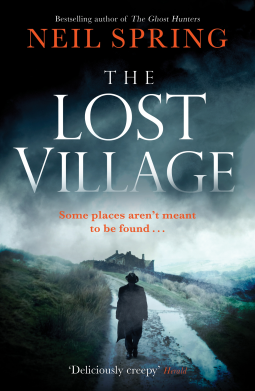
Book Review - The Lost Village by Neil Spring


The perfect accompaniment to a chilly October evening, The Lost Village blends together fact and fiction to form a creepy tale filled with ghosts and long-forgotten memories.

Most of the action is centered on the 'lost village' of Imber. Found on the Salisbury Plains, many years ago soldiers forced the inhabitants out to use it as a military base in the first World War. Once a year the inhabitants are allowed back to visit former loved ones buried in the churchyard. However, mysterious ghostly sightings that have driven the soldiers mad, and rumors of the church bells ringing on their own have started to occur in Imber, with many inhabitants claiming it's the former inhabitants rearing up to reclaim their forgotten village. Only Harry Price and his former assistant Sarah Grey can unravel the truth. Is this an elaborate hoax? Or the work of the undead?

After a brief prologue involving an elderly Sarah and a ghostly visitation, we jump straight into the action with a younger Sarah investigating the Brixton picture house, which has a notorious reputation for ghost sightings. I found myself feeling as though I was there with Sarah as she explores the dark rows of seats, and there's an almost palpable tension created as she realises that the 'ghost light', usually left on by the last employee to leave on an evening, is switched off. This opening scene was a great  introduction to the overall feel for the rest of the novel, which was deeply atmospheric, creepy and filled with paranormal activity.

The plot itself, where we find Harry and Sarah in Imber, is fast paced, with plenty of twists and turns to keep me guessing until the end. Just when I thought I'd figured something out or solved a mystery, the author threw something unexpected in, which kept me on my toes and allowed me to really enjoy this. It's not often I'm taken by surprise by a story-line, and I was pleasantly surprised. I also liked how the plot all linked together - from the picture house to Imber and the elderly Sarah we see at the beginning. It was cleverly done, and showed that all aspects of the story had a purpose and were thoughtfully considered.

I loved the relationship between Harry and Sarah, which was complex and almost love/hate. It's acutely apparent that Sarah is in love with Harry, but regrets from her past prevent her from acting on this. She also knows just how deeply under Harry's spell she is, and hates herself for it. I loved that aspect of her character. I also liked the fact that the author does not try to present Sarah as anything other than what she is - she feels like a 'proper' person from her time period. There's no 'modern' ideologies, which is great, and nothing about her feels forced.  

Harry is more complicated a character. As we only see things from Sarah's perspective, it's hard to get a grasp on who he really is and how he feels about Sarah. He often comes across as quite abrasive, and short with people who do not share is opinion. At one point in the story he's also appears to complete drop his own perspectives about the paranormal after one particular incident, which felt a bit out of place for him - especially as Sarah is convinced that it's a hoax. 

My main issue with Sarah and Harry was that I felt there wasn't any proper closure between the two characters at the end. I wanted the two of them to talk about their past together, which never happened - and so much was left unspoken that I was a little bit disappointed at the potential that was missed there.

However, I found this an exceptionally well written tale with a great amount of atmospheric detail that kept me enthralled to the end.

The Lost Village will be available to purchase from 19th October.

 - 4 stars

Saturday, 7 October 2017

Book Review - The Canary Club by Sherry D. Ficklin


A very YA look into the world of prohibition era New York, with a dash of gangsters and a frothy romance thrown in.

Canary Club follows 'Bad Luck' Benny - fresh out of jail, and Maisie, daughter of the local 'mob' boss who Benny ends up working for. Maisie is head strong, like her father, yet vows not to follow in his footsteps. Benny is determined to keep on the right side of the law, yet is drawn into a murky underworld in order to provide for his ailing family. With Maisie facing trouble as the pawn in her families fight for control of the city, she turns to the one person she thinks will be able to help her. But can love win over business?

I enjoyed the author's descriptions of prohibition New York. It's an area of history I know little about, and I adsorbed every little morsel of description that was written about it.The slang used is also rather delightful, and for the most part the story itself is well written.

However, this is where it sort of all starts to fall apart for me as I really didn't like either of the main characters. Maisie is rather one dimensional, naive and doesn't really have much going for her. At times I found her boring and shallow. She also comes across as too modern for her era. One of my gripes in historical fiction is making a female character appear to be so brazen in her 'repressed woman' status for her time period, which Maisie frequently laments. It seems really out of character for a woman of her era to express herself in such a way, and it irritates me. 

Benny, as Maisie's love interest, doesn't seem very realistic - he's a mash up of every 'down on his luck' 'jack of the lad' character that's been done before, and far better. Again, he's very one dimensional with no emotional depth and little development throughout the novel.

The plot itself is very centred around the romance elements, and unfortunately it's a case of instalove at its finest. There's no build up to Benny and Maisie falling in love etc. or even any courtship - it's just instantaneous infatuation and it all feels a little bit too 'sweet'. You'd expect a bit of grit for a gangster book. Speaking of 'grit; the 'big bad' is also extremely one dimensional, with little input from the author with regards to making him appear more human and less a simple plot device to provide a problem to the main characters. 

I think that's one of the biggest issues with the book - there's just no depth to any of the characters.

The rest of the plot is also rather flat and predictable. I guessed what was going to happen constantly, and I was never surprised by anything in the plot. Because of this, I did unfortunately find myself getting bored. The whole story line just felt a little underwhelming and rushed - especially the ending. I would have preferred it if more time was spent developing and delving deeper into the characters emotions. Because it was so lacking, I just couldn't get emotionally invested in anything that was happening.

Unfortunately underwhelming for me, but I think this will definitely appeal to those looking for a heavy dose of romance mixed with a sprinkling of history.


2 stars


Thursday, 5 October 2017

Book Review - The Silent Companions by Laura Purcell


The perfect book for a cold Autumn night, The Silent Companions kept me up half the night with fright for all the right reasons.

We start by meeting psychiatric patient Elsie Bainbridge, hiding from a traumatic past with the threat of the hangman looming above her. She seems to harbour an irrational fear of wood, and has lost the ability to speak. With the help of a newly enthusiastic doctor, she starts her recovery by writing down her version of recent events. We are then thrown into Elsie's life a year previously, as she arrives newly widowed and newly pregnant at the ancestral home of her late husband with a spinster cousin, Sarah. The housekeeper and servants are inept, and the local villagers openly hostile - holding a grudge following a number of tragic accidents some years ago. On top of this, the house has a menacing atmosphere - with strange noises at night and the sudden appearances of sinister silent companions that seem to move from room to room.With the discovery of a diary from 200 years ago, Sarah and Elsie hope to answer the reasons behind the unnatural feel to the house - but what they discover may have been better left hidden.

There are three main timelines within the story - Elsie within the psychiatric facility, Elsie at the ancestral home a year previously, and the diary story line of 200 years prior. At times, I found the diary story line quite dull and wanted to skip it. A lot of the information provided within this timeline is rather obvious, and is repeated later on by Sarah anyway. I also didn't really warm to any of the characters. I think perhaps if more time had be spent dedicated to this story line, instead of in small chapters that interrupted the flow of the main narrative, I would have appreciated the information it offered more. The other two timelines worked well together, and the characters here were much more well developed.

Elsie is a wonderful main character - to see the change from newly widowed yet still hopeful woman, to deranged mad woman was a large task to take on - yet I feel Laura Purcell handled it well. You feel as desperate as Elsie does when no-one believes her story, and I found myself really rooting for her - even though I knew it was ultimately hopeless.. The subtle hints scattered throughout Elsie's backstory relating to her late mother, father and Jolyon were also craftily done. I like it when books sometimes don't spell everything out for the reader, and allow their own deductions to work out the mysteries.

Sarah I was less enamoured with. On multiple occasions I found Sarah's obsession with her family history grating, and her insipidness really annoyed me. I understood the reasoning behind this though, as I felt that this was how Elsie felt about Sarah at the beginning too - and indeed their relationship development was definitely a positive to the narrative, although I still thought Sarah relied too heavily on Elsie to 'solve' everything.

That said, the book itself has such a good atmospheric, creepy feel to it  that I was immediately drawn into the world. There's an underlying sense of foreboding throughout - and although there's a slow build up of tension, the release at the end of the novel really packed a punch. The ending was pretty obvious,but I was still genuinely left feeling unsettled and frightened, and it will be a long time before I forget about the silent companions. Perfect for spooky nights.

 - 4 stars

Sunday, 10 September 2017

Book Review - Charlotte Says by Alex Bell


Do you like your novels with creepy little dolls and atmospheric settings? Then this is your story.

Charlotte Says is a prequel to the popular Frozen Charlotte novel from 2015. Not having read the previous instalment, I went into this knowing nothing about the storyline or characters, and I can honestly say I don't think it made any difference. This could easily be read as a standalone story.

A historical novel, this is set in 1901, with our main character Jemima excepting a job at an All Girls industrial school in the Isle of Skye following the death of her mother and step father in mysterious circumstances. Soon after her arrival an usual package arrives from Charlotte's former home which contains a number of Frozen Charlotte dolls. As mysterious occurrences start to happen, Jemima starts to suspect that the dolls may be more dangerous than they first appear.

There's instantly a feeling of foreboding and dread that surrounds the school, and the headmistress is as despicable as you would expect her to be. At times this felt almost like a Frances Hodgeson Barnett novel, with the descriptions of down trodden girls, awful maids and slave labour. I found I had a lot of fondness for all of the girls at the school, especially Estella the outcast of the group. This obviously helped a great deal as the novel progressed and they become more deeply entrenched in the dolls 'games' and misfortunes. I cared greatly about what would happen to the girls, and became anxious when they appeared to be in peril.

The introduction of dolls is cleverly done, and really sets the tone for the rest of the novel. It involves the basement lit only by candlelight and giggling. It's creepy, and scary and the author clearly knows how to set a scene and make the reader feel unnerved. This continues as the story develops, as the dolls get more adventurous in the toy room during the night and as they start to explore the dolls house.

As we move deeper into the novel, the story starts to flit between past and present. We see how Jemima came to be at Whiteladies, her former home, and how the accident with her mother occurred. I would have liked to have spent more time with these chapters as they're short, rather than have them interrupt the flow of the present story so much. Having said that, most of the novel is well paced, with plenty of action and no side stories to get distracted by. All of the focus is on the dolls, and the plot progresses quickly, which is great.

The only aspect I didn't particularly warm to in the novel was Jemima's relationship with Henry. Henry seemed a little useless at times, not really acting as any real help in times of distress, and he often came across as a bit wet. He wasn't as strong a character as Jemima and the girls, and his undying love for Jemima seemed a little far fetched considering he hasn't seen her in a number of years.  However, that said their relationship plays more of a secondary role to the plot, so didn't ruin the story for me too much.

The conclusion is satisfying and very open ended, which helps it work as a prequel. I was surprised that this is aimed at a young adult audience however, as some of the final scenes are a bit graphic in their depiction of violence. I would be cautious before letting younger readers read this. For me though, I'm already set to read Frozen Charlotte ready for Halloween season.

 - 4 stars

Thursday, 7 September 2017

Alex and Eliza by Melissa de la Cruz


Alex and Eliza follows the love story of two characters from American history - Alexander Hamilton and Elizabeth Schuyler. Set during the American Revolution, the novel opens on the Schuyler ball, as Catherine Schuyler schemes to get her three eldest children (all girls) a husband before their financial ruin is uncovered. During the ball, Eliza - the middle of the girls, catches the attention of the handsome Alex Hamilton. Although a Colonel and right-hand man to George Washington himself, he comes with no family name or money, and as such can only admire Eliza from afar. But when fortune forces the pair together two years later, will they be able to resist their growing attraction?

I want to state first before writing this review that I have no idea what 'Hamilton' is, and have no real inclination to find out. All I know is that it is a musical of some kind. I also know very little about American history - being British I'm obviously much more interested in European history, and as such most of the place names and battles mentioned went right over my head. This possibly meant I didn't get as much enjoyment out of this novel as someone who is interested in this aspect of history will.

I initially picked this up because I thought it would be a YA equivalent to Gone With The Wind, or Little Women - which is perhaps unfair to this novel, as these are two great American classics to live up to. The plot, and the romance itself, is sweet and well written - if a little bland. Alex and Eliza seem to spend more time mooning over each other than actually physically getting to know each other. In fact, Alex admits he's infatuated with this women before he's even met her. At times I also found the declarations of love a little cloying - especially from Alex, who is suppose to be a respected Colonel, but came across as a lovesick teenager.

The strongest aspect of this novel was definitely the relationship between the sisters: Angelica, Peggy and Eliza. I could see similarities and influences from Pride and Prejudice in their conversations about suitors, especially in Kitty's story line, and the love they share for each is palpable. I also would have loved to have had more time devoted to the other men in the Schuyler sister's lives - especially the enigmatic British arms dealer. However, I do believe all three girls came across as rather naive and at times I thought the author was trying to force Eliza's 'progressiveness' on the reader too much. She's described as being intelligent and 'strong willed' - her father's favourite, even over his sons (again, I should mirroring of Pride and Prejudice here) but most of the time I felt this behaviour was rather forced and out of character for a female in this time period.

Some of the wording used in this is also odd. Alex uses the phrase 'alas and alack' at one point. I'm all for using phrases commonly banded about in a specific time period, however this was never consistent and rather jarring to the text.

The conclusion was wrapped up well, if a little cliche and what was expected. I would have preferred a few surprises.

I think this novel is aimed more at people who enjoy their American history with a liberal sprinkling of romance. Unfortunately, that's not really me.

Alex and Eliza is available on Amazon now.

 - 3 stars